Personal Development

Motivate Your Team Members (a "How To")

When you think of your team members, do you think of them as eager to work more hours and initiate more responsibilities? Across the board, it seems to be a fair shake out: Some individuals are intrinsically motivated, and others pose a distinct challenge to their manager, resisting to get the bare minimum accomplished. The good news? There are solutions to help motivate your team members.

For many business owners and team leads alike, motivation is believed to stem from “what you get.” The extrinsic incentives — a term linked to Frederick Herzberg’s research on motivation. But here’s the thing about the research, it tells us that motivation does not come from those external incentives such as office perks. It’s not the company game room, the nap pods, the work-funded drinking extravaganzas, or even the promotions (which are all starting to return in the normal course). Instead, these are short-term fixes and there’s an expiration date associated with each. The dangling carrot of promotion is enough to keep someone motivated to reach that achievement, and yet it’s shown that as soon as the promotion is achieved, the motivation doesn’t last. Herzberg very pointedly directs organizations that they have limited power in motivating employees. (Um, yikes?)

Not to worry, the point in exposing the minimal purpose of extrinsic motivation is to demonstrate the necessity of the intrinsic rewards that unlock the vault of motivation (what makes our motor tick). It’s about allowing each person to turn their own keys in the ignition, not constantly trying to start it for them.

Let’s break it down so you can take the most useful tidbits along for the workday (otherwise, read Herzberg’s One More Time for full research).

Create a more enriching environment (leading to motivated employees) by employing the following:

  • Accountability

    • Remove your need to control and make individuals accountable for their work. Not sure if you are controlling (e.g., a micromanager)? Ask for feedback.

  • Responsibility

    • Rather than giving individuals responsibilities for one part of a task, give them ownership of the entire work stream or unit. Don’t fix it for them, and surely do not take credit for a team member’s work.

  • Information flow

    • We like to filter information: Remove this extra step and include your team members in discussions. When trust increases, unhelpful water cooler discourse decreases.

  • Challenge

    • Allow (and encourage) your team to take on new projects and responsibilities they haven’t addressed before.

  • SME

    • Subject matter experts are essential in teams. Not only does this stem from added responsibility and accountability, but it also stems from the trust that this person owns the knowledge for a certain topic. Assigning individuals specializations is useful for their careers and for the teams of which they’re a part.

In short, this is a management worldview for motivation that says, “Empower, don’t control – Educate, don’t tell.”

Not only is this comprehensive, but it’s also reasonable. Of the listed suggestions, what can you immediately change for your team?
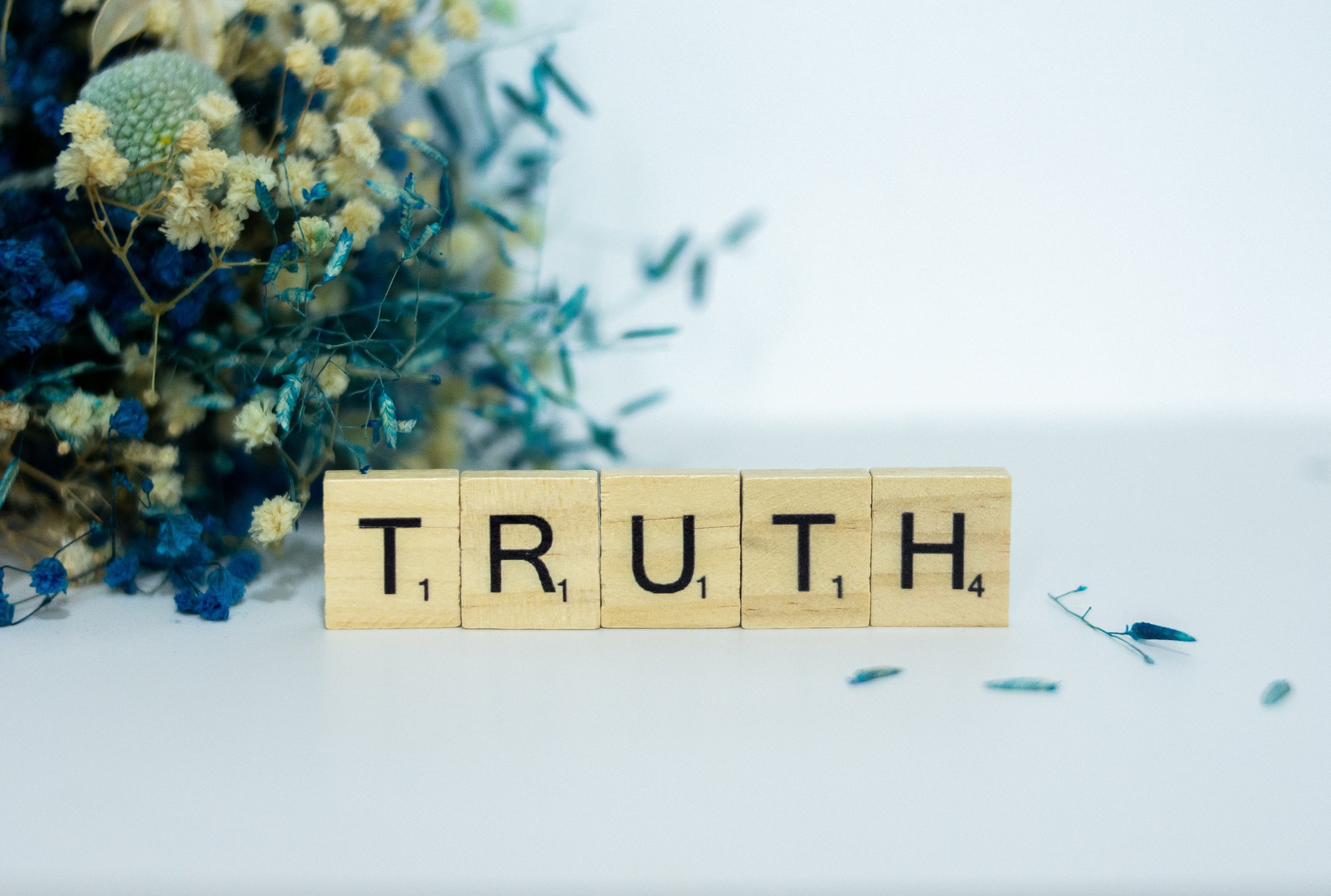
Leading with Integrity

Reinvigorate your leadership practice in 2023 with this philosophy.

If we dissect the root cause of interpersonal conflict, we find it’s nothing revolutionary. It is often about an absence of integrity. To me, integrity is the amalgamation of honesty and respect. If this is seemingly rudimentary… good! It won’t be easy to forget. Are you truthful on a daily basis? Do you respect your peers? If you answered “yes” to these two questions, you are well on your way to leading with integrity. But if we are being completely honest with ourselves, odds are there’s room for improvement.

According to Mindy Mackenzie there’s a truth telling crisis in corporate America. All too often individuals are concerned about the consequences of the truth and lack the courage to tell it. (Fostering inclusive climates support truth telling!)

It’s unlikely that managers set out to lead with an absence of integrity, but when there are tight deadlines, process conflict, personality clashes, and the like, managers are poised to become stressed. Unfortunately, stressed managers may stretch the truth to superiors in the name of saving face and may also fall into the pit of credit theft. A integritous leader would not do either of these things.

But, if you aren’t investing in your personal development (by reading this blog) who will help keep you accountable? Work to create a network of people you respect, are respectable, and can help guide you in the best of -- and most challenging -- times. It's never too early to establish this. 

What’s beautiful about truth-telling is it’s cyclical. When a leader has a fierce team of honest confidants, they are less likely to become ego-maniacs. Similarly, when the developing manager encourages his or her team to tell the truth, regardless of whether they will like the feedback, they perpetuate the truth serum culture.

It’s when you lose the drive to be honest that we compromise ourselves and pave the path for a false reality – one where truth is non-existent. Have you ever been afraid to tell the truth, fearing disapproval, belittlement, or conflict? It’s up to you to ensure this is not the reality for your team.

In 2023, guide your decision-making and communication as a manager through the lens of honesty and respect. It won’t go unnoticed.

Are We Back to "Normal" Yet?

No, We Are Not Quite Yet Back to “Normal.” 

It’s been a while since I’ve written an article and posted on my blog. In part because of life responsibilities, in part because of my own conation, and in part because of exciting work commitments. But, it has been too long and thus I will be back on a quarterly basis to share my two cents about how we can observe current events or life circumstances and extract a valuable leadership and/or management lesson. 

Back to the topic at hand. We are *all* excited to get back to “normal.” What normal means differs from person to person, though, and upon reflection, my perception of normal may have evolved over the past two years. I think we can all agree that normalcy includes a decreased need for masking and an increase in social activities. Normal might even mean some time in an office space, on mass transit, less shopping online, and dining out. 

And while we dabble in the removal of social distancing and masking and aim to enjoy our lives again, we are met with an onslaught of disengagement, burnout, disregard (for fellow humans), and dwindling customer service. I know that if I easily know five people who are experiencing or who have experienced these feelings/encounters, I have no doubt that you have a list handy, too. In fact, you might be experiencing feelings of shoddy customer service or utter fatigue and burnout *right now.* What’s my point? Well, the pandemic may be ending, and things may be returning to normal, but there are lasting effects that we must become aware of and work to improve – NOW. 

Notably, the APA is incredibly concerned for the mental health of our youth – so much so that it has defined the deterioration of mental health in children as a crisis. And, as already alluded to adults aren’t all that with it either. From (the many) altercations on airlines to the hissy fits I see almost daily on the street, I fear we have forgotten how to co-exist. Turns out, there’s some truth to this assertion. 

The number one reason for people behaving in rude or uncivil ways is stress. And we all have undoubtedly experienced at least some stress throughout this pandemic. I need not go into the laundry list of just why people may have experienced stress of late, but it is worth reflecting upon how you, as an individual, feel you deal with stress. Are you more reactive? Less compassionate? Impatient? Quick to madden? Is it any wonder that conflict is stirring around us? I think not. 

What’s more, rudeness (a derivative of poor emotional regulation, caused by frequent and compounded stress), can be contagious. Say you get a delivery that was tossed around in the truck that it came to you on, and then it is used as a soccer ball in the street (you imagine). You now need to not only submit a claim with the company from which you purchased the item and hope for a replacement, but you must determine how to return the product in its botched packaging. Then, moments later, you are taking a call with a colleague who made a mistake on a project and you are noticeably short with them, striking an attack on their competency. You have passed on the angst you’ve just endured. According to Porath, people are three times less likely to help someone else if they feel they have been treated poorly. This means that we might go out of our way to be unkind, rather than kind, and that will consequently motivate the next person to pass on the snub. 

In the context of the work environment – whether onsite or at home – our actions definitionally affect others. This means that as a manager or as a colleague, we must be aware that our resiliency against rudeness has waned; we are at risk of infection! There is little chance for constructive feedback or conflict resolution in this state if we let the rude contagion win. The saying “kindness, pass it on” might need to be our new mantra, especially as we aim to get back to “normal.” A profound finding? Perhaps not, but I am taking note that in the days ahead I will put kindness at the forefront of my actions and communication. Try it with me. 

Until next time,

Brielle

First published on LinkedIn

What Makes Us Who We Are?

Well, who we are and who we become is comprised of many elements. Our experiences, beliefs, perception of identity, interpersonal relationships, upbringing… All of these facets contribute to the greater construct of our being. 

Often who we are is driven by what we want and what brings meaning, fortune, or happiness to life.  

The COVID-19 pandemic threw a wrench in the process of creating or maintaining our identity. It changed not only how we got our meaning but it changed our motivation too.

I love large public speaking engagements and I enjoy meeting with my clients face-to-face. This all changed with the pandemic. Not only was I unable to engage in intellectually stimulating conversations without getting eye fatigue, but I could not get the same response to presentations that I had grown accustomed to. Rather than gaining motivation from those talks, I was being drained of all my energy. The absence of observed interest and comprehension through body language really made my virtual sessions, talks, and the like a challenge for me. 

We all have a story like this. Our plans were derailed unexpectedly and swiftly. 

Rather than focus on the (many) challenges we’ve observed though -- from illness to layoffs to virtual schooling -- we must try to use this as a learning tool for the future. Part of this learning requires us to become aware of the fact that we can become easily attached to an "ideal state" regardless of whether we are fully in control (think career progression, childcare, etc.).

Could you control a global pandemic? No. Do you have every right to be disappointed about a different reality? Sure. But herein lies an opportunity to capture what it is that we love(d) so dearly about life before COVID-19... For example, Gathering. Presenting. Teaching. Learning. The list goes on. But, more importantly, what motivated you to keep going? What enabled belonging and happiness?  

With the Delta variant alive and well I am re-visiting the hard facts of what is and is not in my control and am seeking solutions to progress with honing my skills regardless of the motivation output vs. input reality. This adaptation and acceptance of doing business differently will, ultimately, provide me with a new skill and will also teach me more about just what it is that makes me tick. In the process, I will learn the power of being in the moment -- ultimately leading to a unique embrace of taking it as it comes in an effort to live a more contented life. 

Identify where your motivation is rooted, and adapt to the circumstance.

First posted on LinkedIn.